Nickname: Land of the Lake
Capital
Urmia
Population
~3.3 million
West Azerbaijan borders Turkey and Iraq, giving it a mixed Azeri, Kurdish, and Assyrian population and a history stretching to the Urartian citadels of the Iron Age. Lake Urmia's saline shallows and the Zagros foothills around it produce a stark, wide-open scenery unlike the rest of Iran.
Culture & people
Iran's most ethnically diverse province — Azerbaijani, Kurdish, and Assyrian Christian communities share the land around Lake Urmia.
Notable cities
Urmia
The provincial capital, sitting near the shores of Lake Urmia, once one of the largest salt lakes in the Middle East. Its markets and churches reflect a mixed Azeri, Kurdish and Assyrian heritage.
Khoy
A historic town near the Turkish border with Qajar-era caravanserais and a large fortified bazaar. It has long served as a stopover on trade routes into the Caucasus and Anatolia.
Mahabad
A predominantly Kurdish city in the province's south, known for its role in 20th-century Kurdish history and its mountain surroundings. It offers a different cultural texture from the province's Azeri-majority north.
Highlights
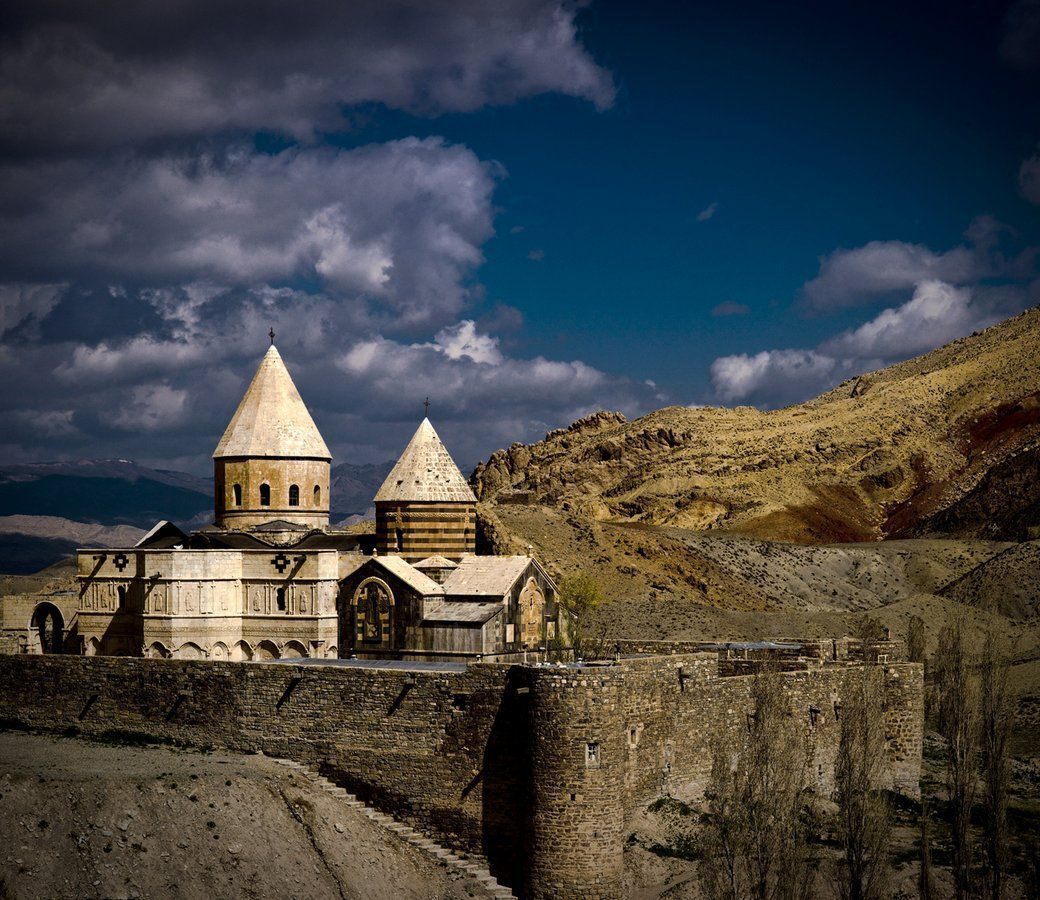
- St. Stepanos Monastery, an Armenian stone church
- Lake Urmia's salt flats and islands
- Se Gonbad, a Seljuk-era brick tomb tower
- Urartian ruins at Bastam
- Markazi bazaar in Urmia's old quarter
Best time to visit
Spring, from April to June, brings green hillsides and mild temperatures before the region's hot, dry summer sets in.
Getting there
Urmia Airport connects to Tehran in about ninety minutes; by road it is roughly nine hours, often paired with a stop in Tabriz.
The province's location, highlighted on the map of Iran.
Tell us what you want from Iran.
Send a few lines about your dates and interests. We'll come back within a day with a draft itinerary and an honest price — no deposit, no pressure.